The first time I picked up a controller for Mario Kart, I was maybe twelve years old, cross-legged on a tile floor in Singapore, the ceiling fan doing nothing about the heat. You hit the mushroom boost, you passed the guy in front of you, and for about three seconds you felt like a genius. Then someone behind you got a blue shell and the whole thing collapsed. It was chaos, but it was our chaos.
This is like the mushroom in Mario Kart!
Charles Leclerc, Ferrari
I thought about that memory last week, watching Max Verstappen tell the world that the pinnacle of motorsport has become a video game. "It's playing Mario Kart," he said after the Chinese Grand Prix. "This is not racing." He said it with the quiet fury of a four-time world champion who is currently eighth in the standings with eight points, fighting a Haas for fifth before his car retired. Two weeks earlier, Charles Leclerc used the exact same reference on team radio in Melbourne, except he was thrilled: "This is like the mushroom in Mario Kart!" Same analogy. Completely opposite conclusions. That is the state of Formula 1 right now.
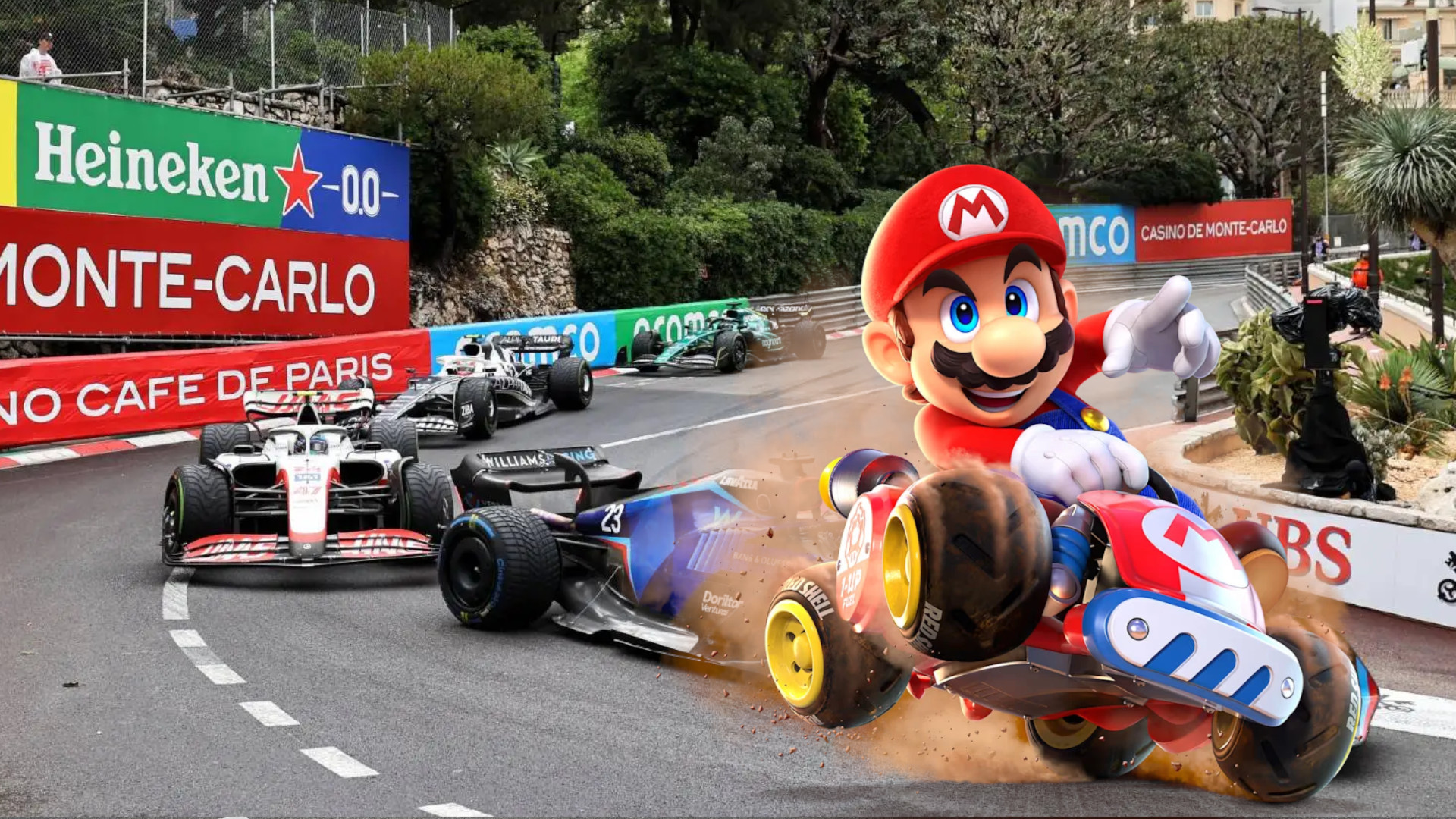
So here is the argument, stripped to its bones. The 2026 power units split roughly 50/50 between combustion engine and electrical energy. Battery management now drives the race as much as driving talent does. There is a boost button for overtaking that drains your charge and leaves you exposed on the next straight. The result, two races in: 120 overtakes in Australia (nearly triple the 45 from 2025), seven lead changes in nine laps, and a paddock so divided you would think they drove different races.
The Messenger Problem
Let me say something that will annoy both camps: Verstappen is the wrong messenger delivering the right message. He spent 2023 winning 19 of 22 races. The most dominant season in F1 history. Critics begged for competitive balance and he shrugged. Now Red Bull's RB22 is, by all accounts, horrendous. Toto Wolff watched the onboard footage and directly called it "just horrendous to drive". Of course Max hates these regulations. They have taken a man who bent the sport to his will and put him in a shopping trolley, as he describes it. "I would say the same if I were winning races," he insists. Maybe. But we cannot test that hypothesis because he is very much not winning races, and the line would land harder if he had spent his dominant years pushing for changes that benefited anyone other than himself.
But strip the messenger from the message and the message holds up. The yo-yo effect is real and it is new. A car surges past on one straight because it has charge, gets re-passed on the next because it does not. That is not a battle of skill. That is an energy cycle with helmets on. Carlos Sainz nailed it: the DNA of the sport is putting yourself in position for an overtake and finishing it with a late brake or a switchback. Energy should get you close. It should not be the overtake itself.
And then there is the safety point, which is the one that actually holds more than just an ounce of water. Lando Norris warned about speed differentials of 30 to 50 kilometers per hour between a car on full deployment and one that has run dry. "When someone hits someone at that speed," he said, "you're going to fly and you're going to go over the fence." We have been lucky so far. Franco Colapinto nearly rear-ended Liam Lawson's stalled car in Melbourne. The closing speeds are not a spectacle problem. They are a physics problem. And you do not get to dismiss a physics problem because the TV product looks exciting. Mario Kart at least had the decency to put a question mark block before it hit you.
The Convenient of Winners
Every single driver who has praised the 2026 regulations is winning under them. George Russell loves the new era. Mercedes has won both races and the only sprint. Kimi Antonelli thinks the racing is fantastic. He just became the youngest pole sitter in F1 history and won from the front in his second Grand Prix. Lewis Hamilton called the Chinese GP "one of the most enjoyable races I've had IN YEARS." He also just secured his first Ferrari podium after a miserable 2025, and the smaller, nimbler 2026 chassis suits his style in a way the ground effect cars never did. Even Leclerc, who acknowledged a shift from "bravest at braking" to something more strategic, is driving a Ferrari that launches like the Mario Kart bullet off the line thanks to a turbo design his team specifically engineered for the new start procedures.
Verstappen himself pointed to this: "Some, of course, will say it's great because they are winning races. When you have an advantage, why would you give that up?" Montoya went further. "80% of the comments are political," the Colombian said. "Why are the drivers complaining that recharging is bad? Because Mercedes can do it better than everyone else."
He is right. And that does not make the complaints wrong. Both things can be true simultaneously. The regulations can produce a competitive imbalance that motivates criticism AND that criticism can identify genuine structural flaws. The mistake is assuming you have to pick one.
My Take (Because What Is the Point Otherwise)
I have watched both races multiple times. I have read every driver quote, every technical breakdown. Here is where I land.
The 2026 regulations have produced more exciting television than anything F1 offered in 2023 or 2024. That is a fact. The Hamilton-Leclerc duel in Shanghai was spectacular, real wheel-to-wheel combat between two elite drivers who were not willing to concede an inch. Antonelli's emergence is the kind of star-making narrative the sport desperately needed. The midfield, with Audi scoring on debut, Bearman delivering for Haas, and rookie Arvid Lindblad impressing at Racing Bulls, has genuine depth for the first time in years. The race is not only intriguing at the top, but falls through the order and remains exciting.
But even the best stories this season carry an asterisk that nobody wants to talk about. Kimi Antonelli is the most exciting young talent F1 has seen since Verstappen himself. I wrote about his maiden win in Shanghai. I believe he is special. And yet: Mercedes was so far clear of the field in China that Russell finished second despite having to re-pass two Ferraris after they jumped him. Antonelli led from pole to flag with a car that was, by any honest measure, in a different postcode to the rest of the grid. Does that diminish his achievement? Not entirely. You still have to execute. But the regulations make it harder to separate Antonelli the driver from Antonelli the battery management strategy, and that is a problem for the sport's storytelling even when the story is a good one. We should be talking about his racecraft, not wondering how much of the gap was deployment.
But more overtaking does not automatically mean better racing, and anyone who conflates the two is being intellectually lazy. There is a difference between an overtake earned at the braking point and an overtake gifted by a battery cycle. Both count as plus-one in the statistics. They do not feel the same.
If you follow cricket (and if you are reading PostGame HQ, there is a decent chance you do), think of it this way. There is a difference between a cover drive that bisects the field and a top edge that clears the keeper for six. Both go in the scorebook as runs. One is batting. The other is luck wearing a helmet. The 2026 overtake statistics have the same problem. The highlight reel is spectacular. But not every entry on the reel was earned the same way.
Motor Sport Magazine captured this perfectly when they wrote about "legibility," the sense that what happens on track corresponds to merit. When a car slows mid-straight because its battery is depleted, or surges past at an inexplicable speed differential, the viewer is watching something they cannot decode in real time. Fans can tolerate complexity, but not complexity that makes outcomes look arbitrary.
My position: the chassis is good. The active aerodynamics are interesting. The new manufacturers are welcome. But the electrical power split is too aggressive. The MGU-K's peak output needs to come down in race trim, probably to around 200kW from the current 350kW, while keeping full power available for qualifying and overtake mode. The yo-yo effect has to diminish. And the safety concerns around closing speeds need to be addressed before, not after, something goes wrong.
Now, I can already hear the counterargument, because F1 fans are nothing if not historically literate. Every regulation change gets called the death of the sport. DRS was "push to pass arcade nonsense" in 2011. Pirelli's degrading tyres were "designed to fail" in 2012. The turbo hybrid switch in 2014 was "the death of real engine noise," and to be fair, the V6s do sound like a dishwasher compared to the V8s. Each time, the paddock adapted, the fans adjusted, and the sport survived. I know this. I am not predicting the apocalypse. But 2026 is qualitatively different from those moments. DRS supplemented the driving. Tyre degradation added a layer of strategy on top of pace. The battery split in 2026 does not supplement the driving. For long stretches of the race, it IS the driving. The optimal lap is plotted on a spreadsheet, not felt through the seat. That is not another regulation gripe. That is a shift in what the sport fundamentally rewards.
The Five-Week Echo Chamber
After Suzuka next weekend, F1 goes dark for five weeks. Bahrain and Saudi Arabia are cancelled because of the Middle East conflict. No races, no fresh storylines, no on-track action to shift the narrative. Just the "Mario Kart" quote reverberating across every podcast, every comment section, every fan forum on the internet. Canal+ has already released a viral Mario Kart parody promo for the Japanese Grand Prix, complete with Leclerc throwing banana peels at Verstappen. The meme is out of the bottle and Nintendo's legal team is probably already drafting something, but honestly, they should be drafting a sponsorship deal instead. Put a question mark block on the Halo. Rename DHL Fastest Lap to "Golden Mushroom." The marketing writes itself and it would still be less absurd than what the actual regulations produce.
Meanwhile, off-track, chaos. Jonathan Wheatley left as Audi team principal on Friday, two races into the job, and is expected to replace Adrian Newey at Aston Martin. Newey, the greatest car designer in F1 history, is stepping back from team boss duties to focus on a car so troubled that both Alonso and Stroll have reported losing feeling in their limbs from vibrations. The 2026 reset has not just changed the on-track product. It has reshuffled the entire competitive order.
The question for Stefano Domenicali and F1's leadership is simple. Do they listen to the drivers, acknowledge that the electrical balance needs adjusting, and make changes before the European season? Or do they count the overtakes, point to the engagement metrics, and wait? Domenicali has left the door open:
If we see something that needs to be addressed, we're going to address it.
Stefano Domenicali - Formula 1 CEO
Good. Address it.
Because here is the thing about Mario Kart. It is a phenomenal game. I loved it as a kid and I would play it right now if you put a controller in my hand. But nobody watches it professionally. Nobody cares who wins the Mario Kart world championship. I’ve won it a dozen times myself. The chaos is the entire point, and once the chaos is over, you turn off the console and go do something else. Formula 1 cannot afford to be that. It has to be the place where the chaos means something, where the boost and the braking and the bravery add up to more than random position swaps on a spreadsheet. Two races in, I am not sure which version of 2026 we are watching. But I know which one the sport needs.
When I was twelve in Singapore, the blue shell was the great equalizer. It didn't care who was fastest. It just cared about chaos. Formula 1 is supposed to care about who is fastest. Two races in, I am not entirely sure it still does.