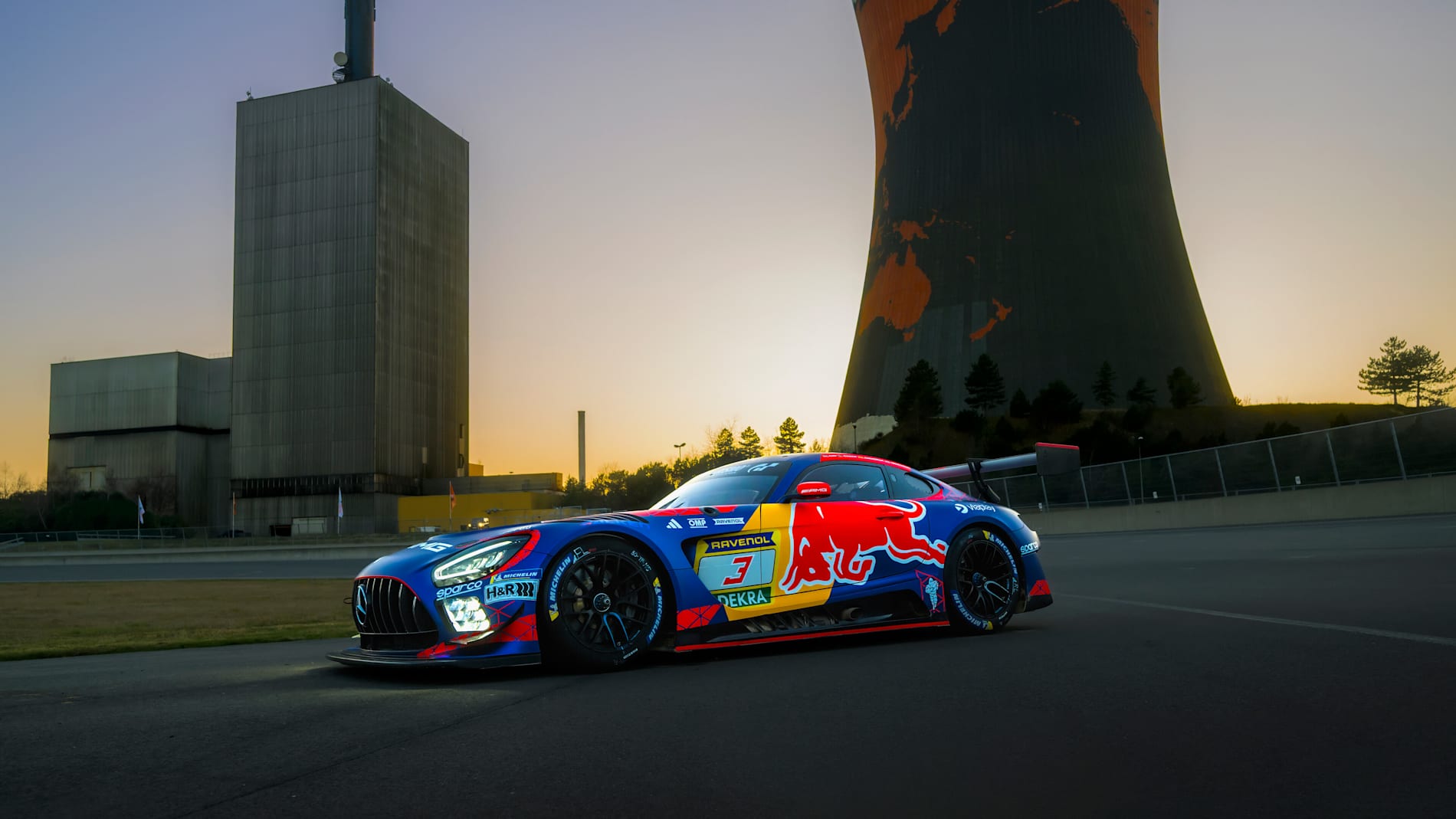
On March 21st, Max Verstappen flew 5,700 miles from Shanghai to the Eifel mountains. He climbed into a Mercedes-AMG GT3. No hybrid maps. No energy harvesting. No boost button. Just 650 horsepower, a sequential gearbox, and 170 corners of the most punishing tarmac on earth. He took pole by two seconds. Won by nearly a minute. When someone asked about the Mario Kart comments, he smiled. "At least you can drive flat out without looking after the battery."
At least you can drive flat out without looking after the battery.
Max Verstappen, Red Bull
A week later, at Suzuka, he finished eighth in a Formula 1 car and told the BBC he wasn't sure the sport was "worth it" anymore.
The instinct is to read this as a competitive story. Champion in a bad car, frustrated, threatening to leave. We've seen it before. But I think something more interesting is happening. Verstappen's crisis isn't really about Verstappen. It's about a question that every sport eventually has to face: what happens when you optimize a competition so thoroughly that you optimize the competitor out of it?
The Adaptation Myth
There's a comfortable narrative in motorsport that goes like this: regulations change, the greats adapt, and the ones who can't adapt weren't that great to begin with. It's a neat story. It's also incomplete.
Formula 1 has always demanded adaptation. Ground effect in the late '70s. Active suspension in the '90s. Hybrid turbos in 2014. In each case, the machinery got more complex, and the driver's relationship to speed changed. Senna had to trust computers. Hamilton had to manage energy recovery. Verstappen had to extract performance from ground-effect cars that his teammates couldn't get within half a second of. The common thread across every era: the new technology ultimately created a wider gap between the best drivers and everyone else as the best adapted. Complexity rewarded mastery. The greats didn't just adapt. They found new edges that the regulations hadn't anticipated.
2026 breaks this pattern. And that's what makes it genuinely novel, not just another chapter in the "drivers complain about new rules" cycle that repeats every regulation change.
The 50/50 power split between combustion and electric doesn't just add complexity. It redistributes agency. Previous eras made driving harder in ways that amplified human skill. You needed better reflexes, better feel, better instinct. The 2026 regulations make driving harder in ways that constrain human skill. Lift-and-coast isn't a technique you master. It's a concession you make. The overtake button isn't racecraft, it's resource allocation. The software decides when you have power and when you don't. Your job, increasingly, is to comply.
Jacques Villeneuve put it precisely after Suzuka: the fatigue drivers are reporting isn't physical. It's mental. Not the productive mental strain of processing a corner at 180 mph, but the unproductive strain of managing a system that actively limits what you can do with the car.
This is the distinction that matters. There's a difference between a challenge that elevates the human and a system that diminishes the human's role in the outcome. Every sport lives or dies on that distinction.

The Sour Grapes Problem
I want to be honest about the counterargument, because it's not trivial.
Verstappen is in a terrible car. Red Bull are sixth in the constructors, 120 points behind Mercedes after three races. He was knocked out of Q2 at Suzuka by a rookie. His teammate has described their chassis as "terrible." The loudest cheerleaders for the new regulations are the ones winning: Mercedes and Ferrari. The loudest critics are the ones losing: Verstappen, Norris, Alonso. Toto Wolff suggested that only "conservatives stuck in the past" could dislike the new racing. There's an obvious incentive story here, and dismissing it would be intellectually dishonest.
But the sour grapes explanation has a problem. It can't account for the specificity of Verstappen's complaint.
He isn't saying the cars are too fast, or too slow, or too fragile. He's making a precise claim about the relationship between driver input and car output. "It's playing Mario Kart. You are boosting past, then you run out of battery the next straight, they boost past you again." This isn't the language of a man who's upset about the standings. It's the language of a man who feels the causal link between his skill and the result has been severed.
And he's not alone in the diagnosis, even among drivers in competitive cars. Lewis Hamilton, who's on the winning side of these regulations, said during preseason that the cars are so complicated "you need a degree to fully understand it all." Alonso called it the "battery world championship." Liam Lawson described himself as "mentally drained" after Suzuka. These aren't complaints about difficulty. They're complaints about a specific kind of difficulty, one that doesn't reward the thing these men have spent their lives perfecting.
Would Verstappen be this vocal if he were winning? Almost certainly not. But the fact that competitive frustration amplifies a criticism doesn't make the criticism wrong. Sometimes the person with the most to lose is also the person seeing most clearly. The question isn't whether Verstappen's motives are pure. It's whether his diagnosis is accurate.
The Deeper Pattern
Here's where I think the Verstappen situation transcends Formula 1.
Every competitive discipline, at some point, faces a version of this tension. Chess confronted it after Deep Blue. The question wasn't whether computers could play chess. It was whether the game still meant what it used to mean when the machines were better at it than the humans. Basketball confronted it during the analytics revolution: when three-point optimization started homogenizing play styles, the sport had to ask whether efficiency and beauty were the same thing. They aren't always.
Formula 1's version of this question is particularly sharp because the sport has always existed at the intersection of human and machine. That's what makes it unique. A sprinter's body is the instrument. A footballer's feet are the instrument. A racing driver's instrument is a machine built by a thousand other people, and the driver's genius lies in finding the narrow space between what the machine was designed to do and what the driver can make it do beyond that. The overtake the engineers didn't model. The lap time that shouldn't have been possible. The save that required reflexes no simulation could predict.
The 2026 regulations narrow that space. Not because the cars are bad. They might be brilliant engineering. But brilliance in engineering and brilliance in competition are not the same thing. A perfectly optimized system can be a terrible sport. If the software determines 80% of the outcome and the driver determines 20%, you still have a competition. But you've changed what the competition is about. It's no longer about who can drive fastest. It's about who can manage a system most efficiently. Those are different skills. They reward different people. And the shift from one to the other is not a neutral act, even if it's wrapped in the language of progress and sustainability.
This is what Verstappen is reacting to, even if he articulates it through frustration rather than philosophy. He isn't resisting change. He's resisting a specific kind of change: the kind that makes his particular genius less relevant. And you can dismiss that as self-interest, or you can recognize that when the most talented practitioner of a discipline tells you the discipline has changed in a way that devalues talent, that's information worth taking seriously.
THE ARCHITECTURE OF AN EXIT
Verstappen's position isn't emotional. It's structural. He negotiated an exit clause into his Red Bull contract years before the 2026 regulations arrived, specifically because of his apprehension about the new formula. The clause activates between August and October if he's outside the top two in the championship. After three races, that condition will almost certainly be met.
ESPN reports he's leaning toward a sabbatical rather than full retirement. But motorsport history suggests the distinction is academic. Mika Hakkinen's sabbatical after 2001 was supposed to be temporary. He never came back. Raikkonen's return was a shadow of his first act. The re-entry cost of Formula 1, the biweekly rhythm of travel, preparation, qualifying, racing, debriefing, is so enormous that the motivation to pay it has to come from something deeper than contractual obligation.
The telling detail is what Verstappen is doing with his free time. He entered the Nurburgring 24 Hours in May. He's exploring additional GT3 races during the gap left by cancelled Middle East rounds. His endurance calendar is expanding in precise inverse proportion to his Formula 1 enthusiasm. This isn't a man who's lost his competitive drive. This is a man redirecting it to places where his gift is still the decisive variable. Technically, he has achieved all he needed to achieve in Formula 1, but he always hoped for more than 4 championships.
The Nico Rosberg comparison doesn't hold. Rosberg left because he'd achieved everything and the cost of continuing was too high. Verstappen's calculus is inverted. He hasn't run out of ambition, he of course wants more. He's run out of alignment between his ambition and what the sport is asking of him. Champions retire when they're done. Verstappen might leave because the sport redefined what the job is.
What F1 Stands to Lose
The April 9th meeting will produce incremental fixes. Superclipping tweaks, qualifying energy adjustments, maybe a reduction in the most dangerous speed differentials exposed by Oliver Bearman's crash at Suzuka. But Mercedes and Ferrari will block anything structural. They built their power units around these regulations. Audi and Honda joined Formula 1 because of the electrification philosophy. Unwinding it would undermine the commercial premise that brought them to the grid. The sport has constructed a regulatory architecture that may be incompatible with its greatest active driver, but compatible with every sponsor who has bought into this vision of the future.
F1 cannot be held hostage by one driver's preferences. The sport is bigger than any individual, and there's a strong argument that the new racing has been genuinely exciting for fans, even if drivers find it unsatisfying to produce. Wolff isn't entirely wrong when he points to the spectacle.
But spectacle and sport are not synonyms. Spectacle is what you watch. Sport is what the competitor experiences. The best competitions align those two things: the audience sees something thrilling because the competitor is doing something extraordinary. When they diverge, when the audience is entertained but the competitor feels like an operator rather than an artist, you've built a show. Not a sport. The distinction matters, even if the ratings don't immediately reflect it.
If these regulations push the most ferocious competitor of his generation out the door, that becomes their defining legacy. Not the sustainability targets, not the new manufacturers, not the boost-button overtakes. The story will be simpler: they built a formula so optimized for boardrooms and emissions targets that it bored Max Verstappen into leaving. Not because he couldn't adapt. Because adapting meant becoming less of a driver.
Somewhere in the Eifel mountains, on 170 corners of unforgiving tarmac, he's telling us what racing means to him. Whether Formula 1 is still listening is another question entirely.